Case study 1
Building a UX practice across Sonos hardware and software

Foam models used to evaluate form, proportions and the placement of hardware controls.
When I joined Sonos in 2016, UX for each new product rested largely on one UX designer. Deliverables were vaguely defined, and no one clearly understood when UX work needed to happen within a program. We mostly reacted to what each cross-disciplinary team needed, when it needed it.
Sonos One, our first Alexa integration, shipped on that model. It also showed us that the model wouldn’t scale with a growing product line and a more complex platform.
Hardware programs run for years and software planning is shorter and more iterative, so I defined how UX would work across both timelines.
The practice, built
The right problems, at the right depth, at the right time.
I mapped UX responsibilities across the hardware development cycle, defining which experience questions needed answers at each stage and how fully those answers needed to be resolved.
- 01What experience should this product create?
- 02What do we need to understand before we commit?
- NEWThe Experience Brief
A new UX deliverable created after early experience definition and before detailed design. It aligned the product team, exposed dependencies and unknowns, and made early commitments visible.
- 03How should the experience actually work?
- 04Does it work?
- 05Does it hold together through launch?
A shared point of commitment
Alignment before resolution.
At the same point that the product was taking shape across disciplines, UX needed to define the experience it was intended to deliver.
The Experience Brief gave the cross-functional team a shared view of that intent before detailed design began. It surfaced dependencies, unknowns, constraints and disagreements while there was still time to act on them.
What are we trying to create?
What should this product be especially good at?
What should make the experience meaningfully distinct?
What don’t we understand well enough yet?
What will the experience require from hardware, software and the wider system?
What needs investment now so it can exist later?
In practice
Three tiers of experience definition
Where this product can create a meaningfully distinctive experience.
- Immersive and intelligent sound
- Source versatility
What this category needs to do especially well.
- High-resolution sound
- Accessibility (content and control)
- Longevity
- Versatility and connectivity
Considerations for every Sonos product.
- Setup and onboarding
- Systemness
- Voice assistants and microphones
- App configuration and settings
- Playback and control
- Power management
- Accessible hardware UI
What it unlocked
From a process to a practice.
The operating model established UX responsibilities throughout hardware development. It brought experience decisions forward and defined how the work progressed as programs matured. As the portfolio grew, the practice expanded with a larger team and eventually dedicated hardware UX leadership.
Clearer UX accountability throughout hardware development
Earlier visibility into experience dependencies and risks
A repeatable approach across hardware programs, including Era 100 and Era 300
A practice and team structure that could scale beyond my direct involvement
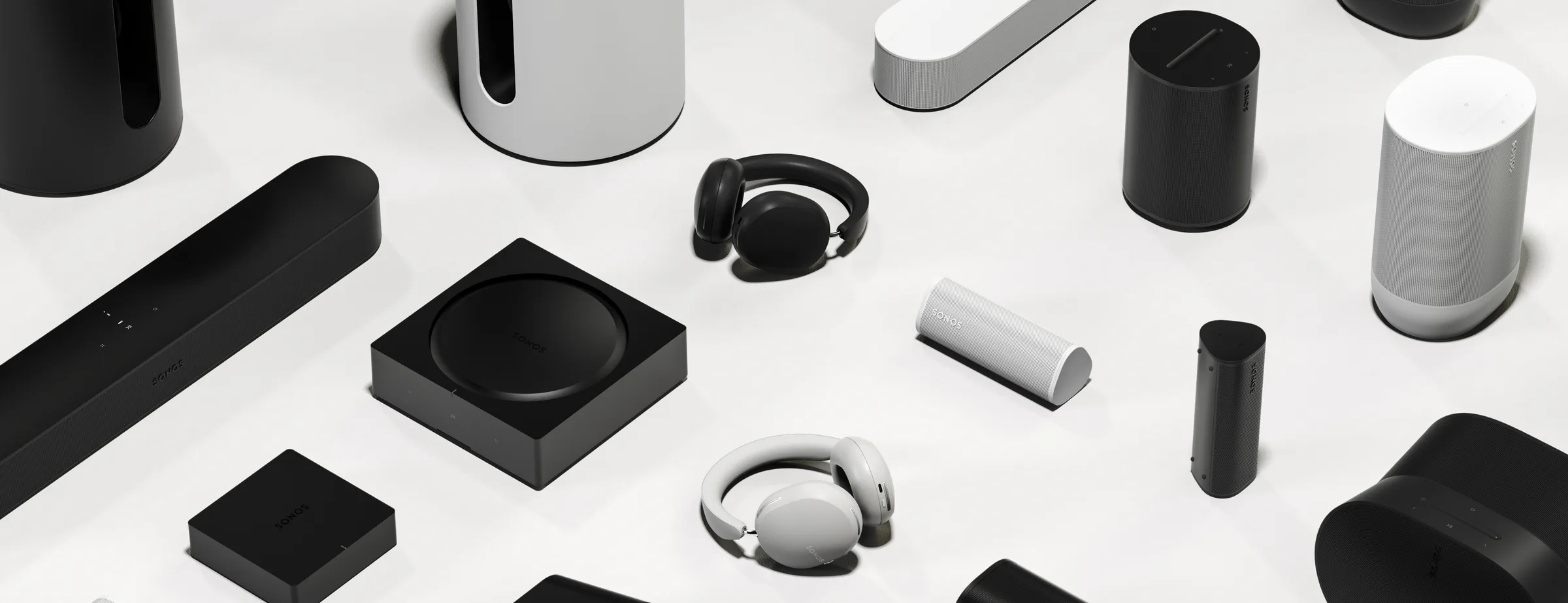
Shipped
28 shipped products across 10 years
- Extensive engagement
- Largely applying platform solutions
- 2017
- Sonos One
- 2018
- Beam
- 2019
- Amp
- IKEA Symfonisk
- Move
- One SL
- Port
- 2020
- Arc
- Five
- Sub (Gen 3)
- 2021
- Roam
- IKEA Symfonisk
- Beam (Gen 2)
- 2022
- Roam SL
- Ray
- Sub Mini
- 2023
- Era 100
- Era 300
- Move 2
- 2024
- Roam 2
- Ace
- Arc Ultra
- Sub (Gen 4)
- 2025
- Era 100 Pro
- 2026
- Amp Multi
- Sonos Play
- Beam Ultra*
- Ace Ultra*
* Shipped after July 2026.